

We investigate the nature of minds, intelligence, consciousness and selfhood; beyond the boundaries of the individual, as multi-scale processes that emerge through nested, distributed, complex systems; across bodies, communities, environments, and planetary systems.
Our practice brings together ancient biotechnologies such as poetry, dance, and ritual; contemporary computational technologies such as artificial intelligence, simulations, and real-time generative systems; and research drawn from fields such as cognitive neuroscience, biology, ecology, fundamental physics, and philosophy.
Our work takes the form of large-scale installations, performances, online works, and publications.
We know that we are deeply entangled within complex, interdependent networks and assemblages of life, composed of and embedded within expansive scales of intelligence, unfolding across multiple boundaries of self.
It’s one thing to intellectually know this, but how can we feel it, in our bodies?
Knowledge about the magnitude of the problems we face doesn’t, on its own, create the mindset to solve them. How do we metabolize this into an embodied response?
Responding to the severance brought on by modernity, and working toward reconnection to the living world, we employ technological mediation as a means of exploring embodied experience rather than escaping it.
Featured projects
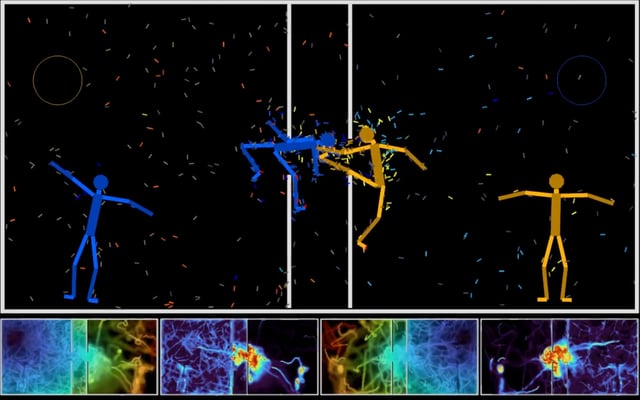
InteractiveSoftwareWeb-based

PerformanceTalkVideo
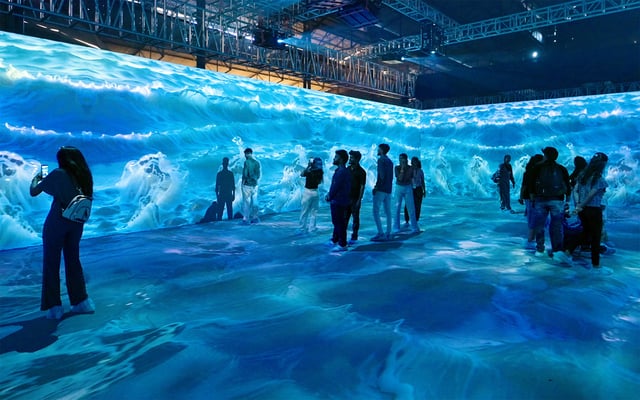
InstallationVideo
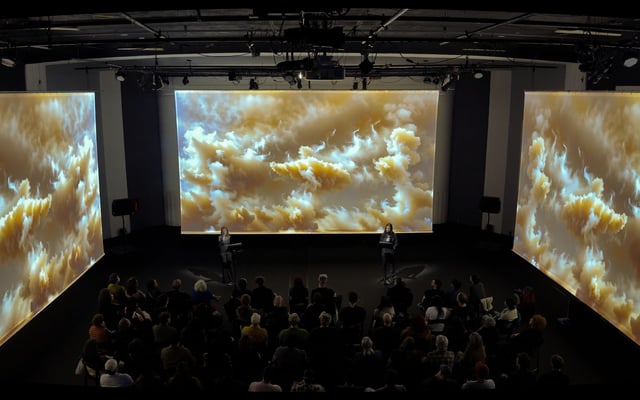
InstallationVideo
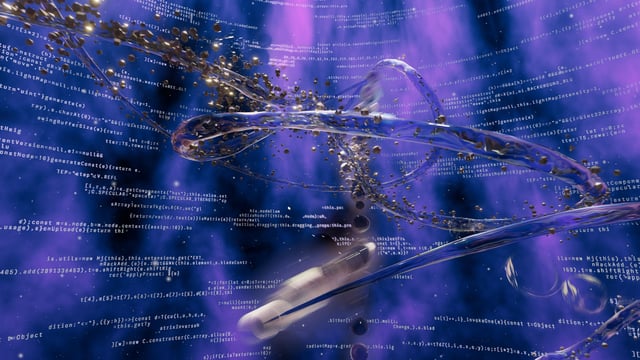
InstallationInteractivePerformanceSoftwareWeb-based
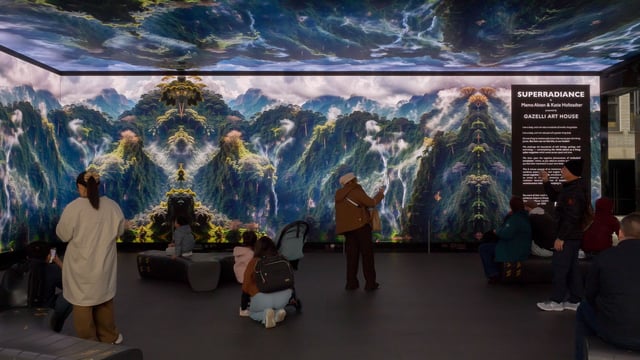
InstallationVideo
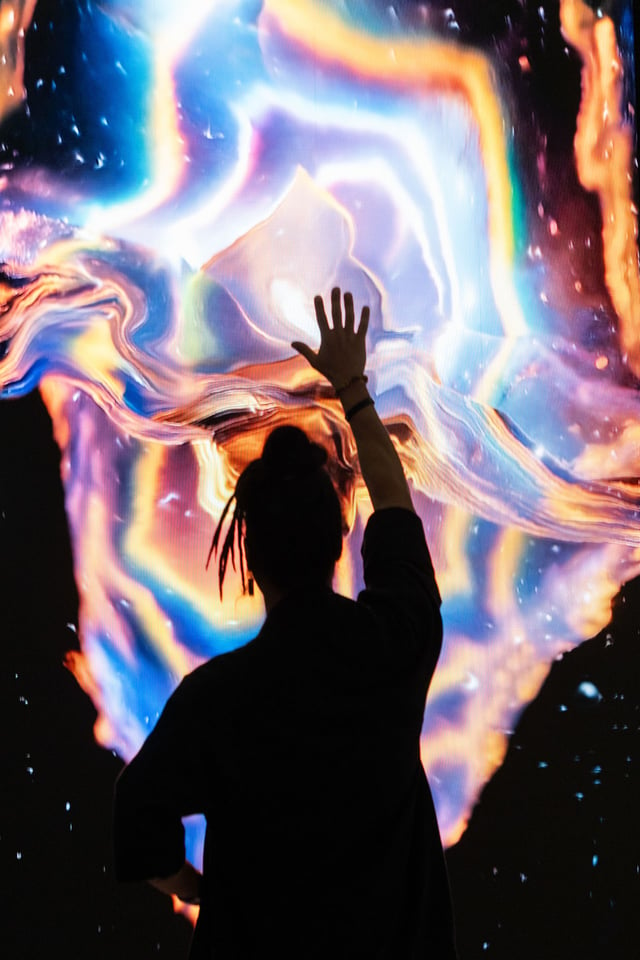
InstallationVideo
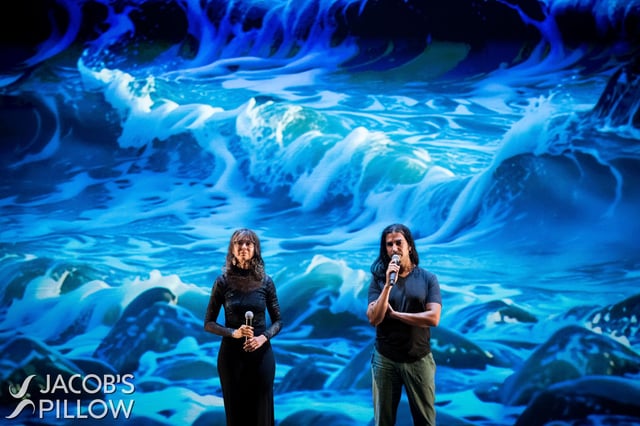
PerformanceTalkVideo
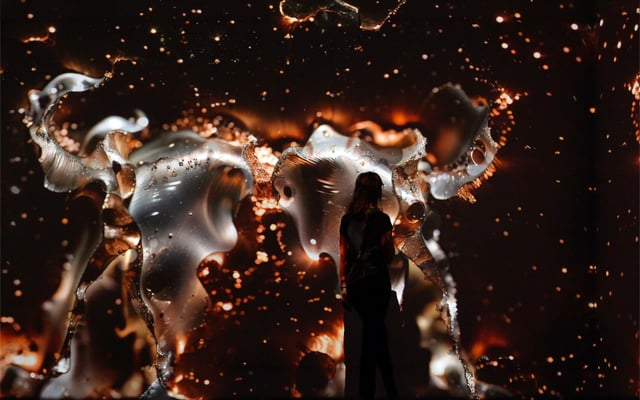
InstallationVideo
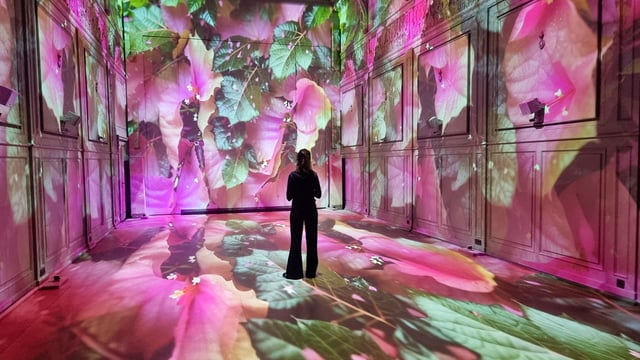
InstallationVideo
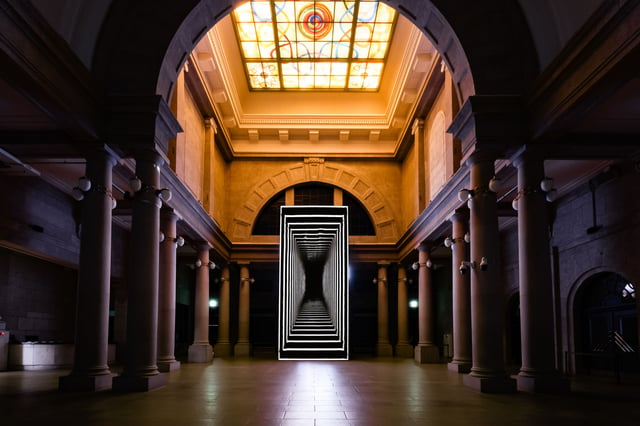
InstallationVideo
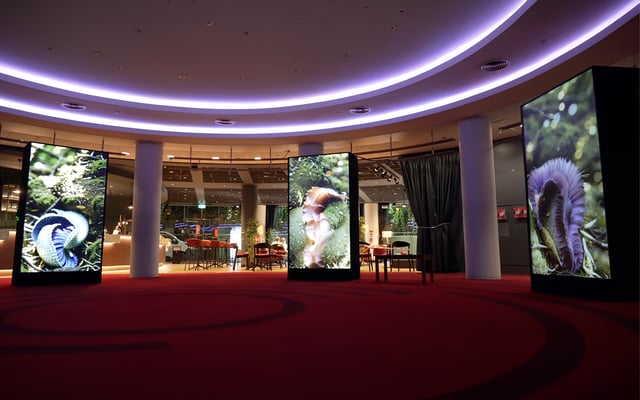
InstallationVideo
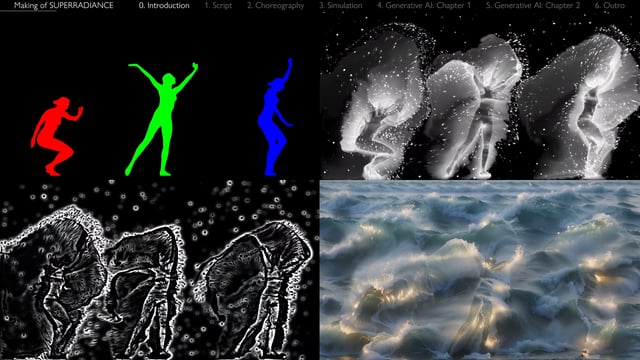
Video

InstallationPerformanceVideo
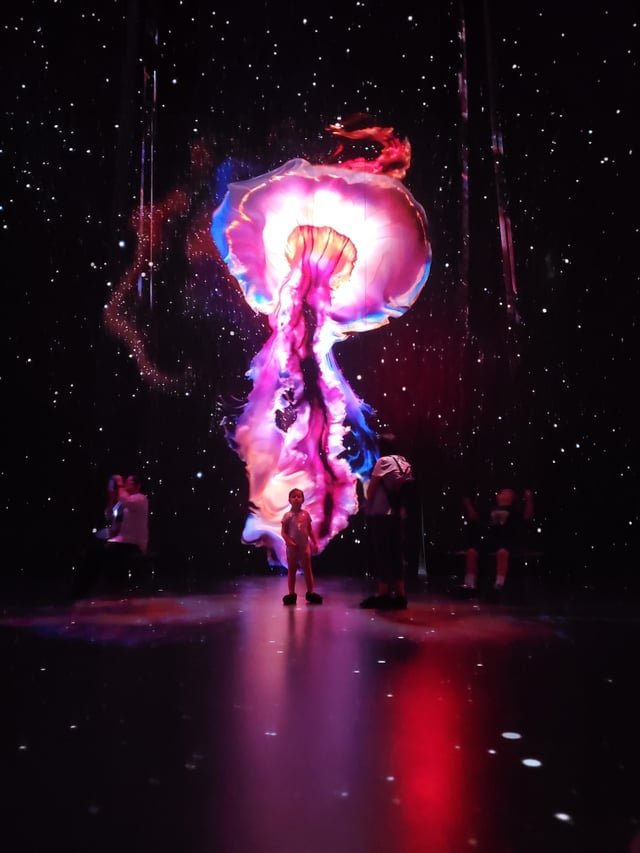
InstallationVideo
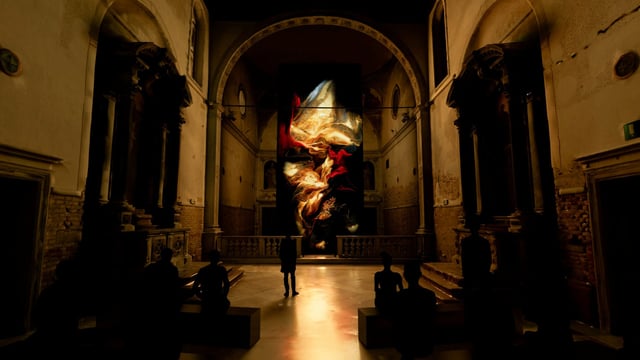
InstallationVideo
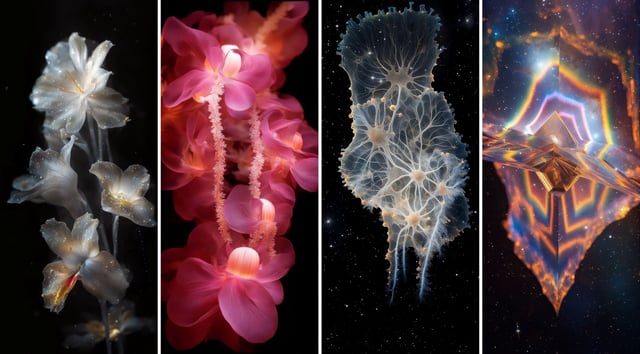
InstallationVideo
Research Themes
Superposition of Epistemologies
At the heart of our practice is a Superposition of Epistemologies: a commitment to exploring and holding multiple ways of knowing and relating at once, without forcing them to collapse into a single worldview. We work in relation to scientific, poetic, embodied, technological, ancestral, and place-based knowledge systems.
What may appear contradictory — the ocean as planetary machine: a system of currents, tides, gradients, interfaces of exchange, marine metabolisms, and trophic relations; the ocean as kin, ancestor, spirit, memory, and living presence — becomes a generative space of inquiry.
Our work emerges from staying with these differences, allowing them to coexist, resonate, inform and transform one another.
Cosmosapience & Multiscale Distributed Intelligence
How does intelligence take form across physical, chemical, biological, technological, planetary, and cosmic scales?
What kinds of systems become sensitive to difference, shaped by feedback, capable of memory, integrating information, adapting over time, and transformed through relation?
How do gradients, cells, bodies, ecosystems, societies, technologies, planetary systems, and cosmic structures participate in patterns of organization and coordination across scales of time and space?
How does causality move across scales, as larger formations constrain, reshape, and enable the processes that compose and sustain them?
How does meaning emerge across scales, as perturbations become consequential within wider forms of organization that remember and respond?
As expressions of an intelligent universe, what is our place in this evolving landscape of minds?
Planetary Consciousness
We investigate the nature of consciousness, self, perception, and awareness.
What kinds of boundaries and interfaces allow selves and lived worlds to emerge?
What conditions within, across, and beyond those interfaces allow relations to become conscious experience?
How are minds composed, sustained, mediated, and exceeded by the bodies, environments, technologies, memories, and planetary systems through which they take form?
As we are increasingly severed from our planetary body, from planetary time, and from planetary memory, are we diminishing our own consciousness?
Planetary Ecology & the Technosphere
We study ecological awareness as an embodied, cognitive, and cultural practice: a way of sensing, thinking, making, and responding within the living systems that compose and sustain us.
How do ecological relations become felt, embodied, and culturally sustained forms of awareness?
What practices allow atmosphere, ocean, soil, microbes, infrastructures, and more-than-human life to be felt as conditions of the body?
How does the technosphere reshape Earth’s ecological, geological, and atmospheric processes, reorganizing minerals, water, energy, heat, data, labor, climate, bodies, attention, and desire?
What forms of ecological awareness emerge when biology, geology, and technology are felt as interdependent processes of a shared planetary body?
Technology & Society
Thinking of emerging technologies as extensions of our bodies and minds, we examine their impact on us as individuals: how we behave, perceive, and express ourselves.
How do these technological systems in turn shape culture, ethics, language, tradition, ritual, religion, and law?
How do they reorganize power, attention, labor, governance, intimacy, and belief?
How do they mediate our relation to Earth and more-than-human worlds, shaping what is perceived as kin, resource, infrastructure, intelligence, or life?
Embodied Human-Machine Interaction
Our practice merges ancient biotechnologies such as dance, ritual, and poetry with emerging technologies including AI, simulations, virtual and augmented reality, responsive environments, sensing systems, and computational media.
Through real-time feedback between bodies, machines, and spaces, we explore new modes of embodied cognition, augmented perception, and co-creative expression.
Theories, texts and other media that inspire us in this work
Below is a very incomplete, inexhaustive list of theories, texts and other media that inspire us in this work.
(And vastly expanded, interactive, thematically explorable version of this is in the works)
- adrienne maree brown. Pleasure Activism: The Politics of Feeling Good. Chico, CA: AK Press, 2020.
- Alva Noë. Action in Perception. Cambridge, MA: MIT Press, 2004.
- Andy Clark. Surfing Uncertainty: Prediction, Action, and the Embodied Mind. New York: Oxford University Press, 2015.
- Anna Lowenhaupt Tsing. The Mushroom at the End of the World: On the Possibility of Life in Capitalist Ruins. Princeton: Princeton University Press, 2015.
- Antonio Damasio. The Strange Order of Things: Life, Feeling, and the Making of Cultures. New York: Pantheon Books, 2017.
- Audre Lorde. Uses of the Erotic: The Erotic as Power. Brooklyn: Out & Out Books, 1978.
- Barbara Ehrenreich. Dancing in the Streets: A History of Collective Joy. New York: Metropolitan Books, 2006.
- Bayo Akomolafe. Dancing with Mountains and The Emergence Network. bayoakomolafe.net, dancingwithmountains.com, emergencenetwork.org.
- Chiara Marletto. The Science of Can and Can’t: A Physicist’s Journey Through the Land of Counterfactuals. London: Penguin, 2021.
- Daisy Hildyard. The Second Body. London: Fitzcarraldo Editions, 2017.
- David Deutsch. The Fabric of Reality: The Science of Parallel Universes and Its Implications. London: Allen Lane, 1997.
- David Graeber. Debt: The First 5,000 Years. Brooklyn: Melville House, 2011.
- David Graeber and David Wengrow. The Dawn of Everything: A New History of Humanity. New York: Farrar, Straus and Giroux, 2021.
- Donna J. Haraway. “A Cyborg Manifesto.” The Socialist Review 80, 1985: 65–108.
- Donna J. Haraway. Staying with the Trouble: Making Kin in the Chthulucene. Durham: Duke University Press, 2016.
- Douglas Hofstadter. Gödel, Escher, Bach: An Eternal Golden Braid. New York: Basic Books, 1979.
- Douglas Hofstadter. I Am a Strange Loop. New York: Basic Books, 2007.
- Ecuador. Constitution of the Republic of Ecuador, Articles 71–74 (Rights of Nature). 2008.
- Erik Davis. TechGnosis: Myth, Magic, and Mysticism in the Age of Information. New York: Harmony Books, 1998.
- Erwin Schrödinger. What is Life? The Physical Aspect of the Living Cell. Cambridge: Cambridge University Press, 1944.
- Ferris Jabr. Becoming Earth: How Our Planet Came to Life. New York: Random House, 2024.
- Gabriel Popkin. “A Soil-Science Revolution Upends Plans to Fight Climate Change.” Quanta Magazine, July 27, 2021.
- George Lakoff and Mark Johnson. Metaphors We Live By. Chicago: University of Chicago Press, 1980.
- György Buzsáki. Rhythms of the Brain. New York: Oxford University Press, 2006.
- György Buzsáki. The Brain from Inside Out. New York: Oxford University Press, 2019.
- Helen Czerski. The Blue Machine: How the Ocean Works. New York: W. W. Norton & Company, 2023.
- Humberto Maturana and Francisco Varela. Autopoiesis and Cognition: The Realization of the Living. Dordrecht: D. Reidel Publishing Company, 1980.
- James Bridle. Ways of Being: Animals, Plants, Machines: The Search for a Planetary Intelligence. New York: Farrar, Straus and Giroux, 2022.
- James C. Scott. Seeing Like a State: How Certain Schemes to Improve the Human Condition Have Failed. New Haven: Yale University Press, 1998.
- James Lovelock and Lynn Margulis. “Atmospheric homeostasis by and for the biosphere: the Gaia hypothesis.” Tellus XXVI, 1974.
- Jane Hirshfield. The Asking. New York: Knopf, 2023.
- Jeff Hawkins. A Thousand Brains: A New Theory of Intelligence. New York: Basic Books, 2021.
- Jeremy England. Every Life Is on Fire: How Thermodynamics Explains the Origins of Living Things. New York: Basic Books, 2020.
- Jeremy Narby. Intelligence in Nature: An Inquiry into Knowledge. New York: Jeremy P. Tarcher/Penguin, 2006.
- Jorge Luis Borges. The Book of Imaginary Beings. Translated by Norman Thomas di Giovanni. New York: Viking Press, 1969. Originally published in 1957.
- Judea Pearl and Dana Mackenzie. The Book of Why: The New Science of Cause and Effect. New York: Basic Books, 2018.
- Karen Bakker. The Sounds of Life: How Digital Technology Is Bringing Us Closer to the Worlds of Animals and Plants. Princeton: Princeton University Press, 2022.
- Kevin Mitchell. Free Agents: How Evolution Gave Us Free Will. Princeton: Princeton University Press, 2023.
- Lee Cronin, Sara Walker, and others. “Assembly Theory”. Nature, 2023.
- Margaret A. Boden. The Creative Mind: Myths and Mechanisms. London: Routledge, 2004.
- Meghan O’Gieblyn. God, Human, Animal, Machine: Technology, Metaphor, and the Search for Meaning. New York: Doubleday, 2021.
- Michael Levin. The Levin Lab.
- N. Katherine Hayles. How We Became Posthuman: Virtual Bodies in Cybernetics, Literature, and Informatics. Chicago: University of Chicago Press, 1999.
- Neil Postman. Technopoly: The Surrender of Culture to Technology. New York: Alfred A. Knopf, 1992.
- Nick Lane. The Vital Question: Energy, Evolution, and the Origins of Complex Life. New York: W. W. Norton & Company, 2015.
- Nora Bateson. Combining. Axminster: Triarchy Press, 2023.
- Paul Edwards. The Closed World: Computers and the Politics of Discourse in Cold War America. Cambridge, MA: MIT Press, 1996.
- Peter Godfrey-Smith. Other Minds: The Octopus and the Evolution of Intelligent Life. New York: Farrar, Straus and Giroux, 2016.
- Raymond Noble and Denis Noble. Understanding Living Systems. Cambridge: Cambridge University Press, 2023.
- Robert Macfarlane. Is a River Alive?. London: Hamish Hamilton, 2025.
- Robin Wall Kimmerer. Braiding Sweetgrass: Indigenous Wisdom, Scientific Knowledge, and the Teachings of Plants. Minneapolis: Milkweed Editions, 2013.
- Robin Wall Kimmerer. Gathering Moss: A Natural and Cultural History of Mosses. Corvallis: Oregon State University Press, 2003.
- Ruha Benjamin. Imagination: A Manifesto. New York: W. W. Norton & Company, 2024.
- Satish Kumar. Interviewed by Richard Dawkins for “Enemies of Reason.” Channel 4, 2007. youtube.com.
- Silvia Federici. Caliban and the Witch: Women, The Body, And Primitive Accumulation. New York: Autonomedia, 2004.
- Stanisław Lem. Solaris. Warsaw: 1961. English translation: New York: Harcourt, 2002. Also: Andrei Tarkovsky, Solaris (film), 1972.
- Stephon Alexander. The Jazz of Physics: The Secret Link Between Music and the Structure of the Universe. New York: Basic Books, 2016.
- Suzanne Simard. Finding the Mother Tree: Discovering the Wisdom of the Forest. New York: Alfred A. Knopf, 2021.
- Sy Montgomery. The Soul of an Octopus: A Surprising Exploration into the Wonder of Consciousness. New York: Atria Books, 2015.
- Tyson Yunkaporta. Right Story, Wrong Story: Adventures in Indigenous Thinking. Melbourne: Text Publishing, 2023.
- Tyson Yunkaporta. Sand Talk: How Indigenous Thinking Can Save the World. San Francisco: HarperOne, 2020.
- Ursula Franklin. The Real World of Technology. CBC Massey Lectures. Toronto: House of Anansi Press, 1990.
- Ursula K. LeGuin. “The Author of the Acacia Seeds.” In The Compass Rose. New York: Harper & Row, 1982.
- Ursula K. LeGuin. “The Marrow.” In Hard Words and Other Poems. New York: Harper & Row, 1981.
- Ursula K. LeGuin. “The Ones Who Walk Away from Omelas.” In The Wind’s Twelve Quarters, 275–284. New York: Harper & Row, 1975.
- Vanessa Machado de Oliveira. Outgrowing Modernity: Navigating Complexity, Complicity, and Collapse with Accountability and Compassion. Berkeley: North Atlantic Books, 2024.
- Vine Deloria Jr. Evolution, Creationism, And Other Modern Myths. Golden, CO: Fulcrum Publishing, 2002.
- Yasmine Ostendorf-Rodríguez. Let’s Become Fungal!: Mycelium Teachings and the Arts. Amsterdam: Valiz, 2023.
- Zoë Schlanger. The Light Eaters: How the Unseen World of Plant Intelligence Offers a New Understanding of Life on Earth. New York: Harper, 2024.
Why 'Superradiance'?
When particles (e.g. atoms, molecules) are excited (e.g. with light), they enter a higher energy state. After a while, they release that energy, typically by emitting light. This is what we call fluorescence (or phosphorescence, depending on the specific process). Normally, each particle acts independently, emitting at random times. The emissions are uncoordinated, so the light waves interfere both constructively and destructively, and the overall intensity scales linearly with the number of particles (e.g. 10× particles → 10× brightness).
In some special situations, if all the particles are in quantum coherence, their internal oscillations are phase-aligned and they behave like a single system. They act collectively, perfectly in sync. The emitted waves interfere purely constructively, fully reinforcing each other. Now the intensity grows quadratically with the number of particles (e.g. 10× particles → 100× brightness), producing a super-bright burst of light.
When the particles act in sync like this, this is Superradiance.